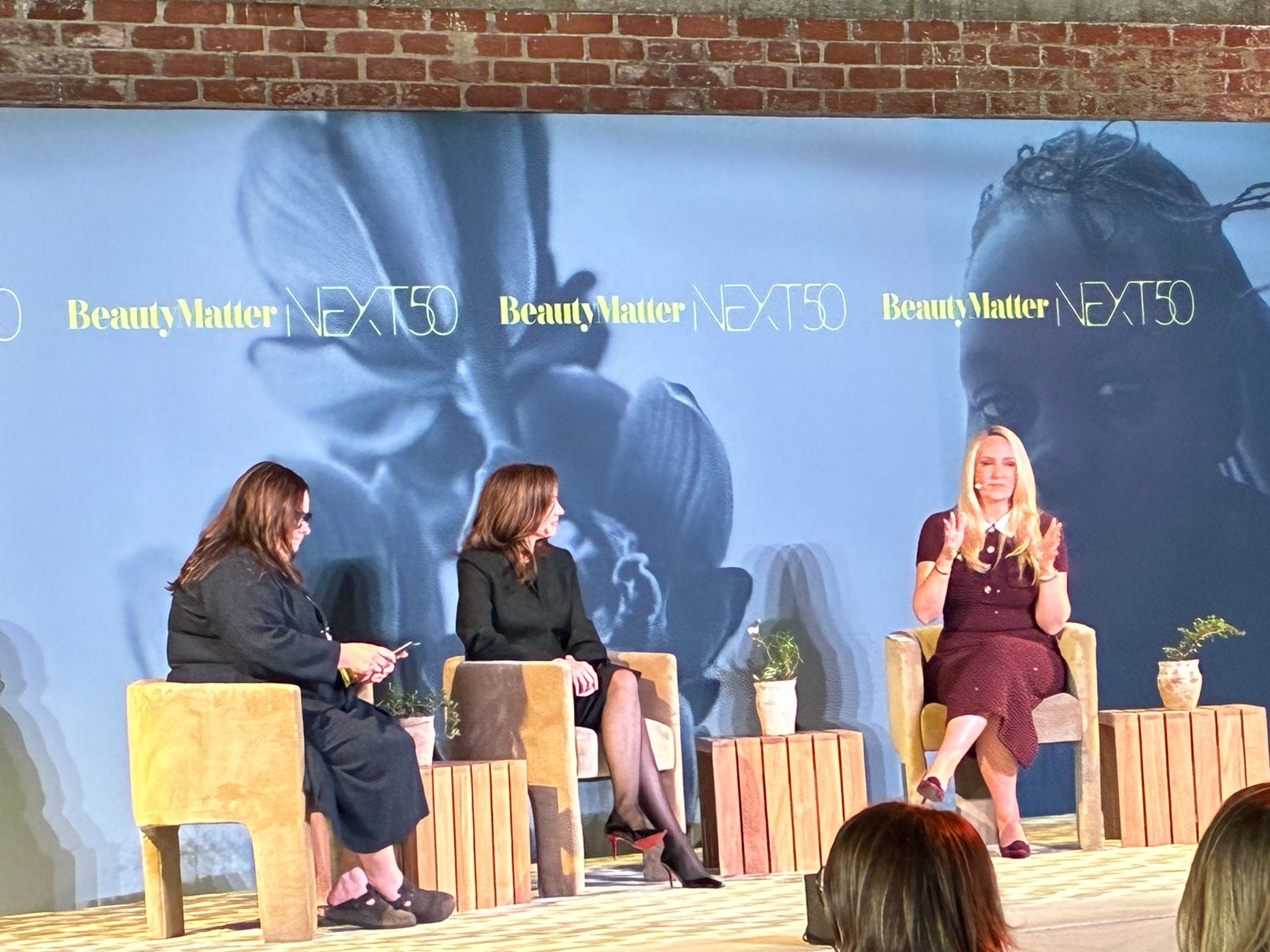
At BeautyMatter NEXT50, Ulta Beauty’s merchandising and marketing leaders discussed a broader proposition for emerging brands: start the conversation earlier, connect discovery with distribution, and build beyond the launch.
A place on the shelf gives a beauty brand somewhere to sell. It does not, on its own, give consumers a reason to buy.
That distinction ran through the BeautyMatter NEXT50 conversation featuring Lauren Brindley, Ulta Beauty’s chief merchandising and digital officer, and Kelly Mahoney, its chief marketing officer, alongside BeautyMatter founder and CEO Kelly Kovack.
The discussion outlined a role for Ulta that extends beyond selecting products and allocating shelf space. Merchandising, marketing, consumer insight, digital discovery, and store experiences were presented as connected parts of brand-building—not separate tasks to address once a retail agreement is in place.
For emerging founders, the proposition was partnership. The opportunity is to engage earlier. The business challenge is determining what that collaboration actually delivers.
A retail agreement is not a complete growth plan
One of the most practical tensions raised during the conversation concerned the handoff between merchandising and marketing.
A brand can develop a direction with a merchant, then encounter a different perspective when the plan reaches marketing. What appeared settled needs to be reconsidered, sending the brand back into another round of decisions.
The problem is not necessarily disagreement. It is when that disagreement happens.
If marketing enters after the commercial direction has been established, the brand may have to retrofit its customer strategy around decisions already made. Earlier collaboration creates an opportunity to resolve those questions before they become an expensive pivot.
That reframes the retail conversation. The question is not only whether a product belongs in the assortment, but where the brand is going, who it intends to reach, and how the launch will support that ambition.
It also makes the combination of merchandising and digital in Brindley’s remit particularly relevant to the discussion: product selection and the ways consumers encounter those products were being considered together.
The invitation is to start earlier
Ulta encouraged founders to begin conversations before every element of their business or expansion plan is fully formed.
The message was not that every idea is ready for stores. It was that waiting until a brand believes it has the entire retail formula figured out may mean missing an opportunity to develop the approach collaboratively.
The discussion suggested room for different paths rather than one universal launch model. A brand’s stage, customer, and ambitions would shape the conversation.
For founders, that distinction matters. A smaller test and a broad rollout are not simply different sizes of the same decision. They create different demands on inventory, marketing, and execution.
The practical value of early engagement therefore depends on specificity: what is being tested, what support is available, what the brand must contribute, and which results would justify the next step.
An open door is valuable. A shared plan is what makes it commercially useful.
Data needs to change a decision
Ulta’s customer relationships and consumer information were recurring themes, positioned as resources for understanding where demand is moving and helping brands respond.
The promise is compelling: a retailer can contribute more than access to shoppers. It can potentially help a brand understand them.
But there is an important distinction between having information and knowing what to do with it.
For a founder, the meaningful outcome is a better decision. Consumer insight might inform which products to introduce, how to explain their benefits, which audience to prioritize, or where to create a physical experience.
That is where the partnership proposition becomes more substantial. Instead of treating marketing as amplification for a predetermined launch, customer knowledge can help shape the launch itself.
The unanswered question is how that process works for individual brands: which insights they receive, how recommendations are developed, and how results are evaluated.
Discovery is moving—but not in only one direction
Creators and content featured prominently in the conversation, alongside consumer prompts, AI tools, and emerging forms of digital commerce.
The emphasis was on understanding where consumers are looking and what they are asking—not assuming discovery begins in one predictable place.
That has implications for how a brand tells its story. Content must do more than establish visibility. It needs to explain the product in ways that answer an actual customer question.
The AI discussion extended that idea into new discovery environments. Ulta described an appetite for experimentation, using its data and learning quickly as the technology develops.
The opportunity was framed positively, as a way to bring more brands into its ecosystem rather than simply a threat to existing retail behavior.
Still, experimentation and established capability are different things. For brand partners, the relevant questions are which opportunities are available now, which remain exploratory, and what evidence will demonstrate that they help consumers discover or purchase products.
The store associate remains part of the intelligence
For all the discussion of technology, one of the most grounded observations concerned the store floor: spend time alongside associates to understand what is happening in beauty.
That brought the conversation back to the moment a customer is trying to make a decision.
Associates encounter the questions a campaign may not anticipate. They hear what shoppers need explained, where product claims create confusion, and what makes someone hesitate.
The discussion also emphasized personal appearances, events, and opportunities to touch and smell products. These experiences give a physical store a role beyond holding inventory.
For a brand, however, an event is not a strategy by itself. It needs a purpose, an audience, and a product story that associates can carry forward after the appearance ends.
The relationship between content and stores is therefore not simply online versus offline. Content can introduce the brand; a physical experience can make its promise tangible. Both need to tell a coherent story.
What building with a retailer requires
The business proposition depends on connecting those functions.
Merchandising establishes the product’s place in the assortment. Marketing builds a reason to notice it. Consumer insight sharpens the approach. Associates and store experiences help translate interest into an informed purchase.
For founders, involving a retail partner earlier may help align those decisions. But it also requires clarity about responsibilities, resources, and measures of success.
That is the distinction between getting into Ulta and building with Ulta. The first establishes where a product can be bought. The second requires a shared understanding of why consumers will choose it—and what both businesses will do to earn that choice.
Getting Into Ulta Is One Thing. Building a Brand With Ulta Is Another Thing.