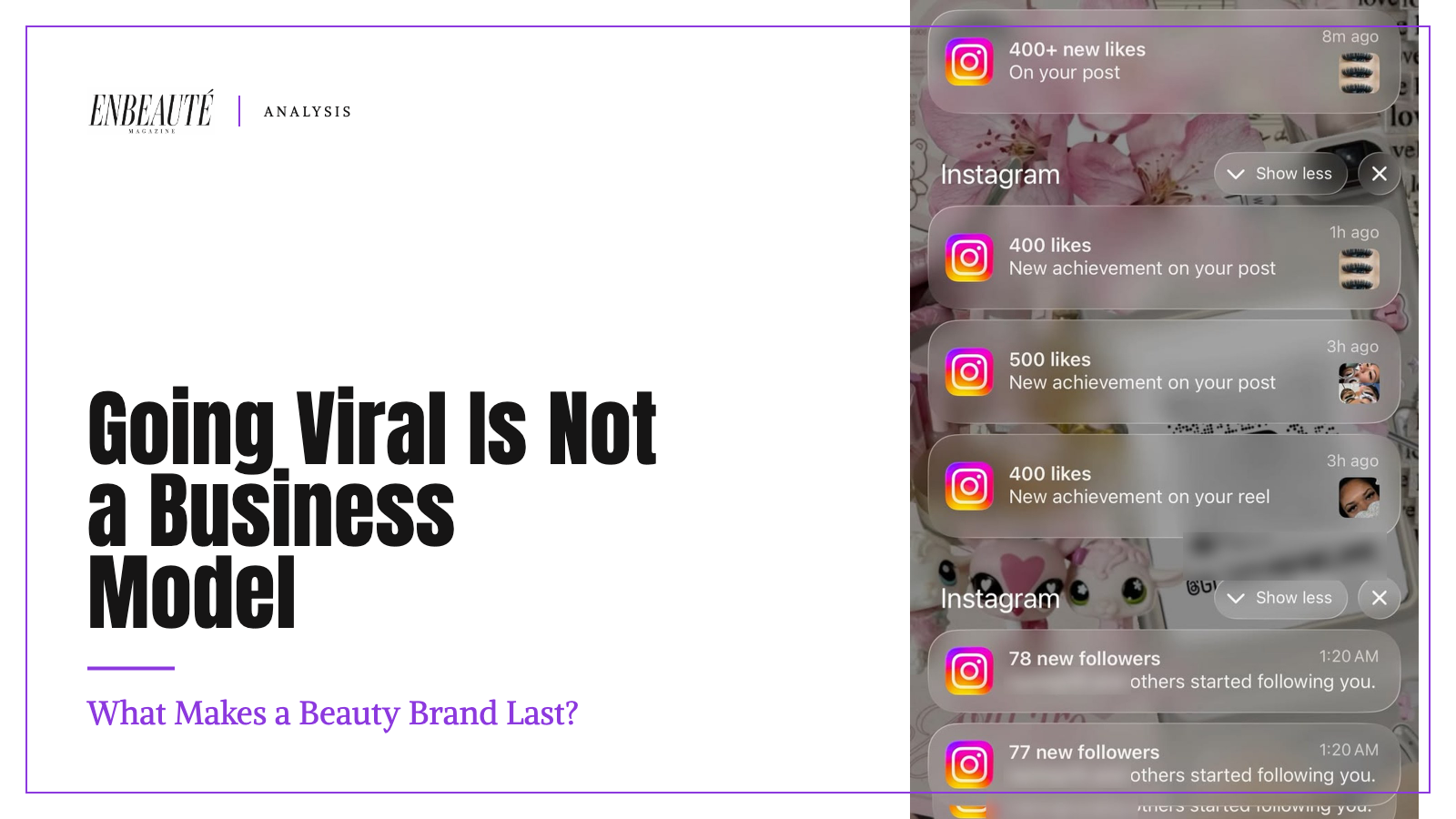
Going Viral Is Not a Business Model. What Makes a Beauty Brand Last?
At Beauty Connect, leaders from Tower 28, Rael, and Oak Essentials discussed what keeps a beauty business relevant after the algorithm moves on.
Amy Liu has a beauty buzzword she would happily retire: “TikTok viral.”
Understandable. Beauty has turned those two words into a product description, a marketing objective, and occasionally a substitute for explaining why something deserves to exist.
But getting someone to stop scrolling and getting them to finish a product, miss it, and buy it again are different achievements.
That distinction ran through a Beauty Connect conversation moderated by Breaking Beauty founder and podcast host Carlene Higgins, featuring Liu, Tower 28’s founder and CEO; Rael CEO and co-founder Yanghee Paik; and Oak Essentials CEO Lauren Harris.
The most useful parts concerned decisions that rarely become campaign headlines: rejecting a launch, reading complaints, understanding when a customer needs you, and having enough money to survive a difficult stretch.
Beauty loves a debut. This was about earning the return.
## Does Beauty Need Another Lip Product—or Does Your Launch Calendar?
Harris shared a familiar temptation: even her own team has suggested that Oak Essentials make a lip product.
Her response was to question whether customers wanted one from Oak Essentials.
Those last three words do a lot of work.
A popular category is not automatically your opportunity. Customers can love your brand without needing you to supply every object in their bathroom. Sometimes they already have a lip product. Several, actually. There may be a small archive in the handbag.
For Harris, Oak Essentials’ focus on customers over 40 provides a filter. “Essentials” has to mean something beyond looking tasteful on the packaging. Products need to earn their place in the customer’s routine—and justify staying in the assortment.[1]
The question is sharper than *Can we sell this?* It is *What makes us the right brand to make it?*
That is where a point of view becomes an operating decision: what gets funded, developed, and left alone. An assortment can get bigger while the reason to choose it gets smaller.
Make Something People Need, Not Just Notice
Liu shared advice from a business school professor: make a painkiller, not a vitamin.
In that analogy, a vitamin is optional. A painkiller addresses a problem someone actively wants resolved.
“The more that you can make it clear to your customer that you are really solving a need,” Liu said, “the more I think that you can really create a customer for life and not just for a moment.”
For Tower 28, that need centers on sensitive skin. Liu described its foundation launch as addressing a specific tension: wanting coverage while worrying about breakouts.
That is a more useful starting point than announcing everyone’s new obsession. It identifies what might prevent someone from buying.
According to Liu, Tower 28 placed an open casting call in The New York Times, invited participants to try the product, and featured people from that process in its imagery. Some subsequently shared content about what being represented meant to them.
Representation did practical work here. Seeing skin that resembles your own gives you something more specific to evaluate than a flawless face and a confident caption.
That does not establish repeat purchase. It does connect the product promise to the people expected to believe it.
Your Customer Already Left Notes. They’re in the Reviews.
Paik pointed to a research source with considerably less glamour than a brand immersion dinner: Amazon reviews.
From Rael’s early days, she said, the company examined feedback to understand what customers liked, what frustrated them, and what needed improvement. The team also reads competitors’ reviews.
There is something wonderfully inconvenient about that approach. Customers do not have to speak in your brand language. They can simply tell you the product annoyed them.
The useful part is what happens next. A repeated complaint can suggest a development priority; consistent praise can identify something worth protecting. Listening becomes commercially meaningful when it changes a decision.
Paik described a related approach on social media, where Rael discusses periods and hormonal experiences rather than treating every post as a product pitch. Those conversations also inform the company’s thinking.
That gives “community” a more demanding definition. People need somewhere to speak—and evidence that the brand is paying attention. Otherwise, it is an audience with a nicer name.
A Full Event Is Lovely. What Happens Afterward?
Harris traced her community approach back to expanding Jenni Kayne’s retail presence.
Outside Los Angeles, beautiful stores and products did not necessarily give unfamiliar customers enough context to understand the brand. Workshops and women’s speaker panels offered another way in.
“It was just about creating community,” Harris said, “and then the transaction naturally followed.”
At Oak Essentials, she described events and educational programming connected to an advisory council of six experts across women’s health disciplines. The intention is to support customers through a life stage that involves more than selecting a moisturizer.
The logic is clear: offer something useful before asking for another purchase. But the commercial questions deserve to stay in the room. Do people return? Does the programming deepen product understanding? Does the relationship continue afterward?
The examples illustrated the approach; they offered less evidence of whether it translates into repeat purchases. A warm room and a successful retention strategy are not automatically the same achievement.
Harris’s framing of aging made the proposition more specific.
“Women aren’t looking to live to be 120 years old,” she said. “I think women just really want to feel good right now.”
Beauty is comfortable selling a future face. There is room to be more useful to the woman who has plans this afternoon.
Trust Gets Personal When the Product Really Matters
Paik described Rael’s “moments of truth”: periods, discomfort, acne, and postpartum recovery. She pointed to enthusiastic feedback from new mothers using its disposable period underwear as one example of a product meeting a particularly personal need.
That is worth separating from the usual conversation about category expansion.
An adjacent category may look attractive on a growth plan. For the customer, it is something happening to her body, on a particular day, under particular circumstances.
Paik described the ambition as becoming a “companion brand” that customers return to through different stages of life. That relationship depends on delivering when the product matters—not simply finding another occasion to sell it.
And Then Someone Said “Unit Economics”
During the rapid-fire questions, Liu brought the conversation to financial staying power.
“That all starts with honest unit economics,” she said. “You have to have the balance sheet to make it through.”
There it was: the part that does not fit neatly into a dreamy campaign treatment.
A product can be loved and still be expensive to sell. Emotional connection matters, but the company needs the financial capacity to keep delivering.
“We don’t talk about money enough,” Liu added.
Especially in conversations about longevity, we should.
The speakers’ closing observations returned to the customer’s calculation. Liu described shoppers as increasingly value-conscious. Harris argued that premium positioning needs to deliver enough to justify the expense. Paik said she sees consumers becoming more product-driven rather than relying on brand storytelling alone.
The customer is allowed to love the world you created and still question the price of admission.
The Second Purchase Is the More Interesting Story
What connected these examples was a willingness to let customer needs constrain brand ambition: declining an appealing category, making a campaign more specific to the people it serves, or finding direction in complaints.
None guarantees longevity. Together, they offer a more substantial account of it than “we went viral.”
The harder questions remain: Does the product work? Is there a reason to choose it again? Can the company afford to keep delivering?
A viral moment can earn the introduction. The second purchase is where the story gets interesting.
Going Viral Is Not a Business Model. What Makes a Beauty Brand Last?